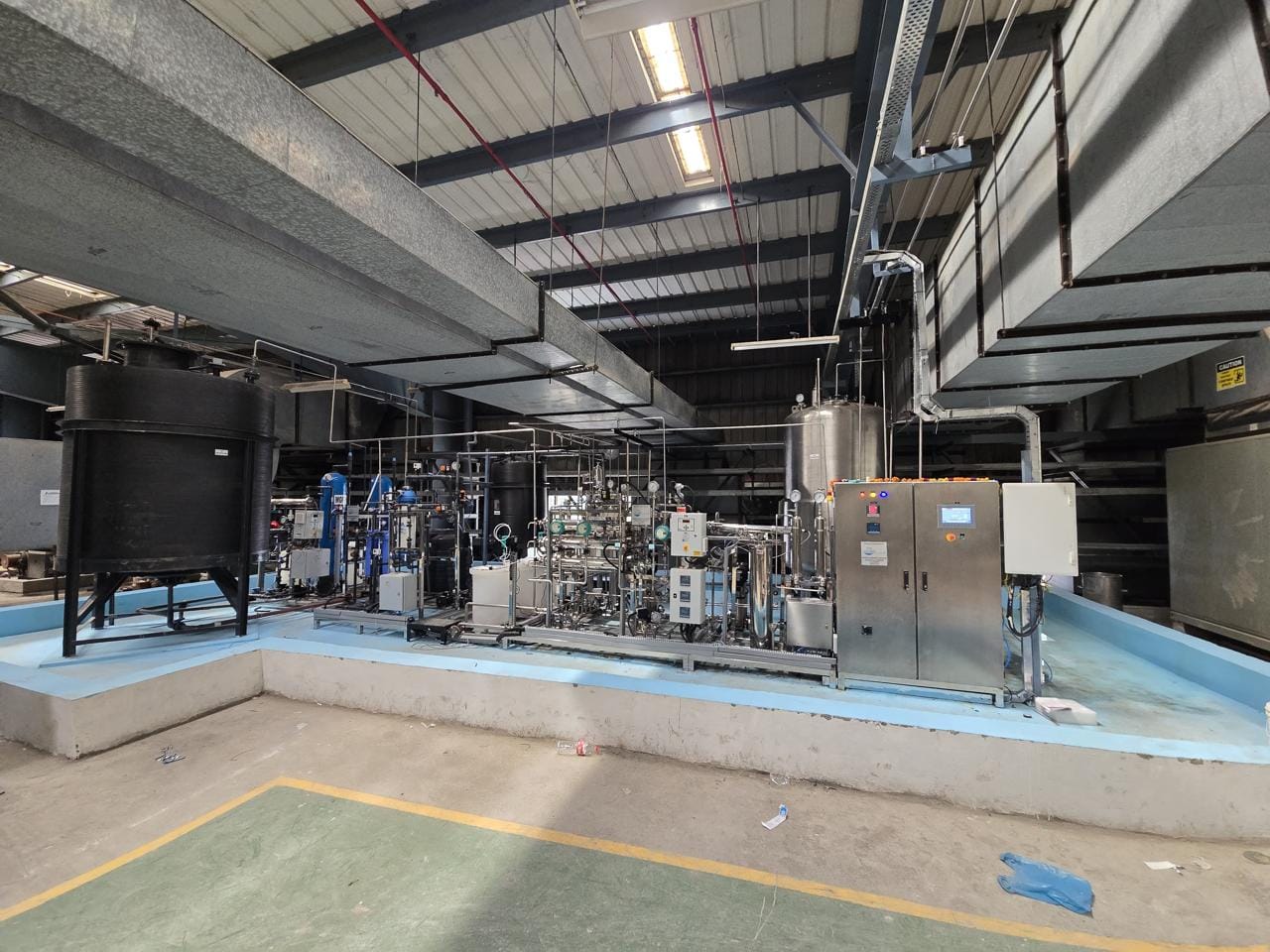
In pharmaceutical manufacturing, water is the most critical utility, serving as a raw material, cleaning agent, and formulation medium. To meet USP, USFDA, and WHO standards, every Purified Water (PW) and Water for Injection (WFI) system must undergo a rigorous three-stage validation.
I. The Validation Framework: IQ, OQ, and PQ
- Installation Qualification (IQ): This is the “static” phase. We verify that the system is built exactly to the User Requirement Specification (URS). Critical checks include verifying Materials of Construction (e.g., 316L Stainless Steel), slope for drainage to prevent stagnant zones, and ensuring all “dead legs” are minimized.
- Operational Qualification (OQ): The “dynamic” phase. Here, we challenge the system’s functional limits. We test alarms, control loops, and “worst-case” scenarios, such as maximum flow rates and power failure recovery.
- Performance Qualification (PQ): The most demanding phase, proving consistency over time. In India, a three-phase approach is standard:
- Phase 1 (2-4 weeks): Intensive daily monitoring of all sampling points to finalize operating and sanitization SOPs.
- Phase 2 (2-4 weeks): Demonstrating consistent operation within established ranges while water is used for manufacturing.
- Phase 3 (One year): Long-term monitoring to account for seasonal variations in feed water quality.
II. Troubleshooting the “PQ Minefield”
The most common reason for PQ failure is microbial contamination, often stemming from biofilm formation in distribution pipelines. Biofilms act as reservoirs that release microbes even after routine chemical or thermal sanitization.
Key Mitigation Strategies:
- Hot Water Sanitization: Systems designed for periodic sanitization at 80°C to 85°C are significantly more effective at controlling biofilms without the use of corrosive chemicals.
- Real-Time Monitoring: Transitioning from offline sampling to online TOC and conductivity analyzers prevents “out-of-specification” (OOS) results from reaching production.
III. Conclusion: Revalidation is Non-Negotiable
Validation doesn’t end with a report. Revalidation is required annually, or after major changes like equipment replacement or piping modifications. By maintaining a robust validation maintenance program, you ensure that your water system remains in a “qualified state,” protecting both your patients and your profit.